'In Gratitude for his Encouragement to Explore Terra Incognita', guest blog by Jaap Hoeksma.
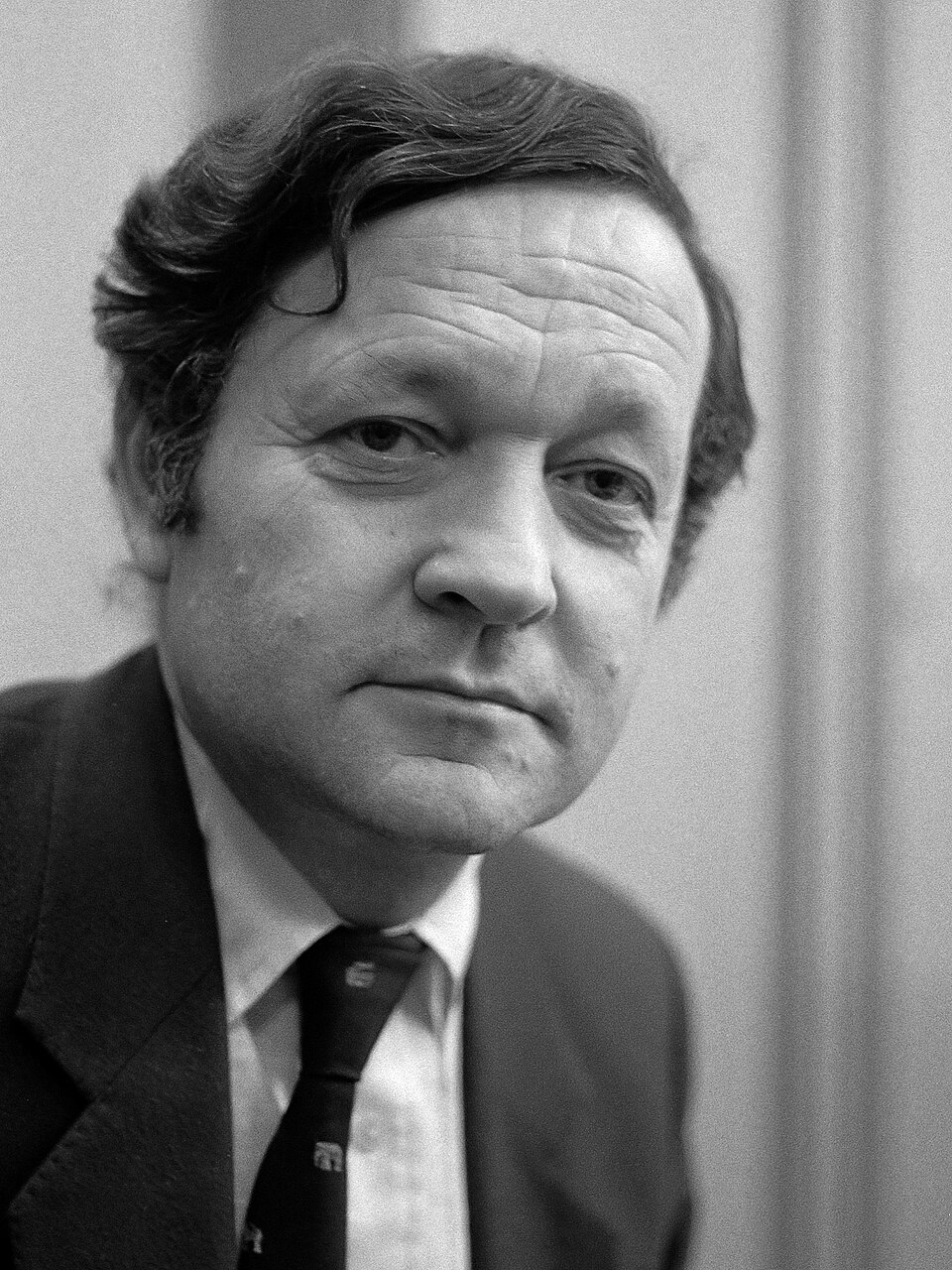
In Memoriam Professor Theo van Boven (26 May 1934 - 9 May 2026)
- Director of the United Nations' Division for Human Rights, 1977-1982
- UN Special Rapporteur on the Right to Reparation to Victims of Gross Violations of Human Rights, 1986-1991
- UN Special Rapporteur on Torture, 2001-2004
- Registrar of the International Criminal Tribunal for the former Yugoslavia, 1994
In 2004, he was awarded the Carnegie Wateler Peace Prize.
If libraries are the laboratories of ideas, as the late Theo van Boven used to suggest, then I have enjoyed the good fortune of working and living in the vicinity of the Peace Palace Library. The unrestricted access to the wealth of ideas and discourses about international law, carefully collected in the Library behind the dunes of Scheveningen, has given me the opportunity to familiarise myself with the fundamentals of what used to be called the Law of Nations.
As a scholar, Theo was devoted to reconciling Westphalian international law with fundamental human rights. He encouraged me, midway along the journey of my life, to investigate whether it would be feasible for the recently founded European Union to surpass the Westphalian system by establishing itself as a democratic international organisation. I owe it to his guidance as well as to the wealth of the Peace Palace Library and the helpfulness of its librarians that I have been able to disclose the democratic principle in International Relations.
World Republic or Free Federation of Sovereign States?
The democratic principle in International Relations holds that, if democratic states agree to share the exercise of sovereignty in ever wider fields with the view to attain common goals, the organisation they establish for this purpose has to be democratic too. At the time of writing his ever-inspiring Perpetual Peace, Kant could not have included it in his deliberations as the principle had not yet manifested itself. Hence, the 18th century author had to restrict himself to the binary choice of either world republic or federation of sovereign states. He and subsequent philosophers like Jean Jacques Rousseau were conceptually restrained by the Westphalian system of International Relations which the latter praised as the eternal foundation of our political system.
Leaving Westphalia
In the wake of the Second World War, the founding states of the current European Union responded to the call of their peoples for No more War by agreeing to prevent the recurrence of war between them. While their innovative method of sharing the exercise of sovereignty in the field of coal and steel is well-known, the conceptual consequences of their unprecedented endeavour have been largely overlooked by political theorists and constitutional philosophers. As Kapteyn rightly pointed out in 1970, their common decision implied a revolutionary breakaway from the traditional patterns of international organisation. In political terms, they abandoned the traditional dogma of absolute sovereignty in exchange for lasting peace between them. Conceptually speaking, the EU founding states abandoned the Westphalian system of International Relations in order to guarantee the future of succeeding generations.
Blinded by Paradigm
Despite the explicit statements and declarations of the contracting parties, however, political theorists and constitutional lawyers continued to study the emerging polity through the lens of the dogma which the founding states had abandoned. Blinded by paradigm, Westphalian scholars insisted on the basis of the Kantian template that the emerging polity had to become either a European republic or a free federation of sovereign European states. Generations of students were tasked to forge the EC/EU into one of the pre-existing categories of either State or International Organisation, although each of them could see that ‘the beast in front of them’ did not meet the criteria of either of the two. Persisting in prejudice, representatives of the competing ideologies agreed to describe the emerging polity as an organisation sui generis and to accept that ‘the nature of the beast can never be established’.
The tragic consequence of the academic disconnect between theory and reality is that the EU lacks a democratic theory capable of defending and strengthening its European democracy. While one of the prevailing ideologies posits that the EU can only have ‘a real democracy’ after it has established itself as a European State, the other argues that unions of states should not aspire to be democratic in the first place. Obviously, the ensuing vacuum renders European democracy defenceless against increasingly vicious attacks from within and from abroad.
The Academic Deficit
Addressing the academic deficit merely requires theorists and philosophers to account for the change of paradigm in international relations which the founding states implemented at the start of their endeavour to make the renewed outbreak of war between them ‘not only theoretically unthinkable but also materially impossible’. By substituting mutual trust and loyalty in their relations for the perennial animosity of the failed states system of the previous era, the founding states broke away from the Westphalian paradigm. In consequence, it should have been obvious to scholars and politicians alike that it would be a priori impossible for the outcome of their endeavour to lay the foundations of an ever closer union among the peoples of Europe to be defined in terms of the abandoned template. In its recent Values Verdict of 21 April 2026 the EU Court of Justice illustrated how far-reaching the consequences of the original paradigm shift are. The Court recalls in recital 522:
Once a candidate State becomes a Member State, it joins a legal structure that is based on the fundamental premiss that each Member State shares with all the other Member States, and recognises that they share with it, the common values contained in Article 2 TEU, on which the European Union is founded. That premiss is based on the specific and essential characteristics of EU law, which stem from the very nature of EU law and the autonomy it enjoys in relation to the laws of the Member States and to international law. That premiss implies and justifies the existence of mutual trust between the Member States that those values will be recognised and, therefore, that the EU law that implements them will be respected.
European Democracy as a Democratic Union of Democratic States
Acknowledgement of the paradigm swap is an indispensable condition for the observation of the democratic principle in international relations. In fact, it has been activated by the founding states through their experiment of ‘pooling sovereignty’. Once disclosed, however, the democratic principle may be identified as the dynamics which triggers the process of European integration from within. Seen in this perspective, the desire to create an ever closer union has resulted 75 years onwards in the establishment of the EU as a new phenomenon in global governance, that can be defined from the perspective in international law as a democratic international organisation, while it may be identified from the internal viewpoint of the citizens as a democratic union of democratic states.
Theo van Boven’s lifelong commitment was to human rights, international law and the United Nations. As a citizen of one of the member states, however, he also had a keen interest in a democratic European Union. He expected the EU as a European democracy to champion human rights at the global level too. While he suffered both professional and personal setbacks in the pursuit of his ideals, his legacy will inspire colleagues and students beyond his death.
- Carnegie Wateler Peace Prize | Peace Palace
- In Memoriam Theo van Boven Amnesty International (Nederland)
- Theo van Boven - Wikipedia