It is often said that a picture is worth a thousand words. When it comes to the Engravings collection at the Peace Palace Library, an image is truly worth more than any words. Each engraving, created by remarkably skilled artists of the time, guards history, heritage and culture.
Report by Fiorella Soma and Aysenur Ozmen, both students Global History and International Relations, Erasmus University Rotterdam.
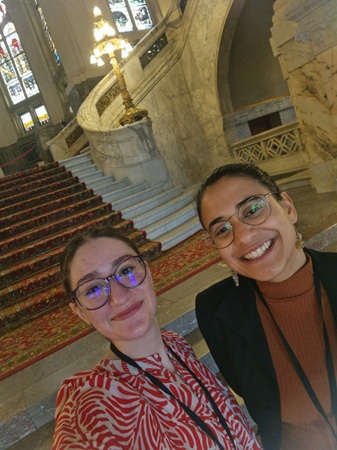
From February to April 2026, we had the honour of participating in the Internship program at the Peace Palace Library in cooperation with Erasmus University of Rotterdam. During our time, we had the opportunity of working on digitizing materials from the Old Prints collection, containing 200- to 400-year-old engravings.
It has been a beautiful journey through the past, exploring different historical periods and events. From peace treaties to battle plans, royal portraits and travel journals, the old collection has it all. Whether you are a historian, anthropologist, researcher, student or a history enthusiast you can explore over 600 engravings now made available on the PPL Digital collections.
In art, “engraving” refers to the technique of cutting lines into a metal plate, which is then inked. The ink rests in the grooves, and a high-pressure press transfers the image to paper. As a technique, it emerged in the 15th century, becoming the dominant printmaking method for over 400 years.
Through the large Engravings collection at the Peace Palace Library, it is possible to chronologically trace many historical events, such as the creation of the Dutch Republic. From the early beginnings of the Duchy of Burgundy to the Eighty Years' War and the European Wars of Religion to the Glorious Revolution (1688) and the crowning of William III of Orange as King of England, the collection brings these events and figures to life through the skilled work of European engravers.
During the Internship at the Peace Palace Library we were able to learn much from these engravings and first-hand accounts available in the Old Prints collection.
Fiorella Soma and Aysenur Ozmen.