The 2026 International Holocaust Remembrance Day ceremony, held on 2 February in the Peace Palace, centred on the lasting impact of the Holocaust on international law. Two keynote addresses reflected on the lives of prominent Jewish figures in the Netherlands during the Second World War. President of the Supreme Court of the Netherlands, Dineke de Groot, honoured Dr. Lodewijk Ernst Visser, former Supreme Court President who was dismissed by Nazi authorities and whose legacy continues to shape the Dutch legal system. Dr. Ir. Ronald E. Waterman, Holocaust survivor and renowned environmental engineer, who recounted his childhood under Nazi persecution, his survival through multiple camps, and his later pioneering contributions to nature-based coastal engineering. Additional remarks by the Israeli ambassador and the mayor of the Hague, along with musical performances, underscored the ceremony’s commemorative purpose.
By Felix Weinlinger, Mitglied Österreichischer Auslandsdienst, Peace Servant at Carnegie Foundation , Peace Palace, The Hague
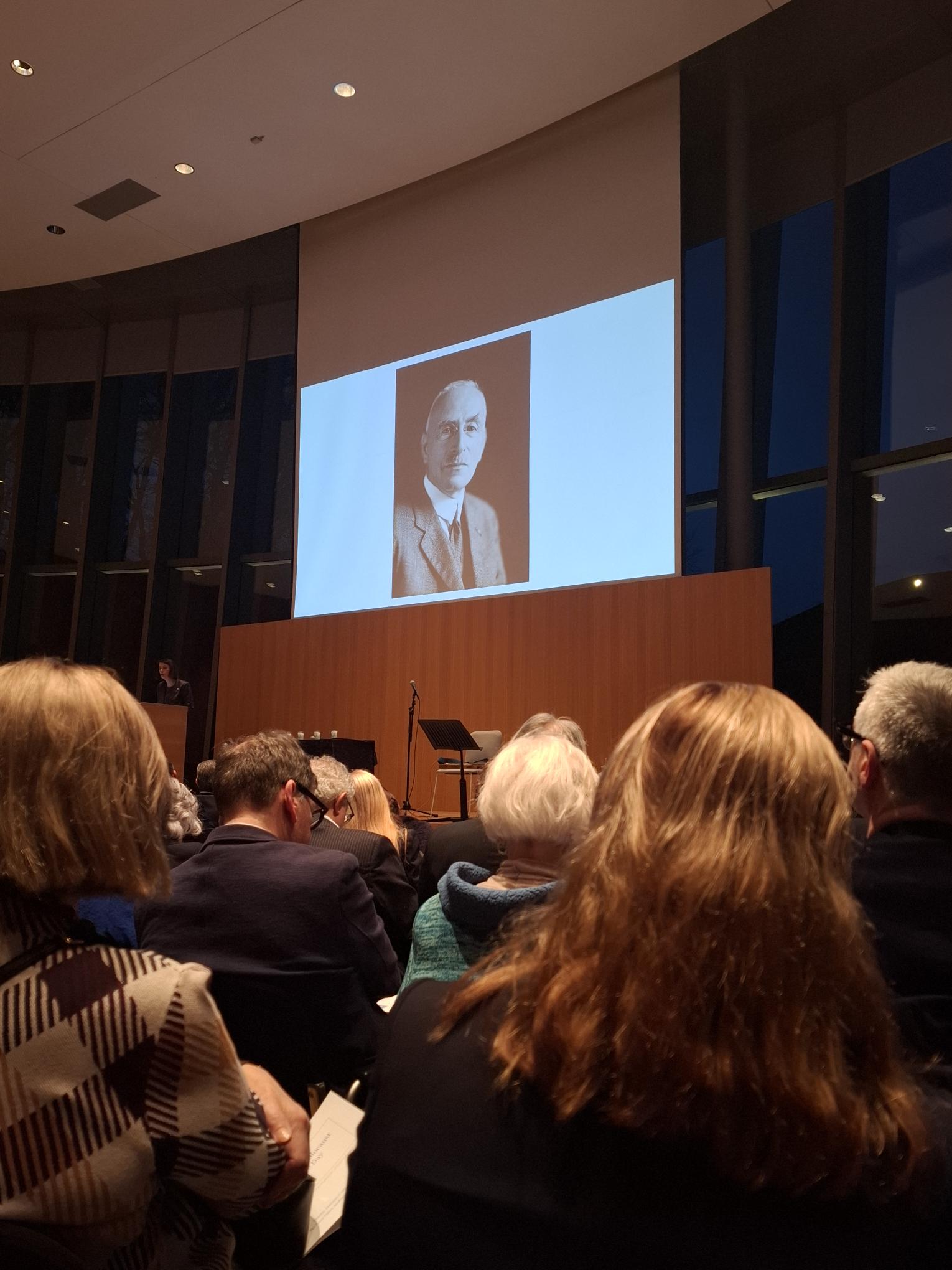
This years annual international Holocaust Remembrance Day which took place in the academy building of the Peace Palace on the 2. February had two keynote speakers which presented two moving stories of Jewish figures during the time of the second world war. The event focused on the impact of the Holocaust on international law.
The first one Dineke de Groot, current President of the supreme court of the Netherlands presented the life story of Dr. Lodewijk Ernst Visser. He was a member of the supreme court of the Netherlands from 1915 onwards and was eventually promoted to President of the supreme court in the year of 1939 soon after followed his forced resignation in November 1940 by the occupying Nazi forces.
Second keynote speaker was Dr. Ir. Ronald Waterman, 91-year-old holocaust survivor and graduate of the TU Delft in chemical and environmental engineering. Later in life Dr. Waterman developed an innovative, nature-based approach to water protection and land reclamation. Although present on stage, he was unable to hold the lecture himself instead his granddaughter Sophie van Elk presented his life story to the attendees.
Additional speakers for the event included the ambassador of Isreal to the Kingdom of the Netherlands H.E. Zvi Aviner Vapni and the mayor of the city of the Hague. The attendees also had the pleasure of enjoying music performances by Roi Shabbat and the Chief Cantor of the Vienna Jewish Community Shmuel Barzilai.
Among the guests were ambassadors of different countries to the Kingdom of the Netherlands, along with employees from the Israeli embassy, members of the Jewish community. Also present were staff members of the institutions of the Peace Palace, which include the Carnegie Foundation, the International Court of Justice, the Permanent Court of Arbitration and the Hague Academy of International Law.
Judge Lodewijk Ernst Visser
Born in the Netherlands in Amersfoort in the year of 1871 Lodewijk E. Visser spent his life devoted to law. Despite his accomplished carrier in law advancing through some of the most important judicial organs of the state, Dr. Visser often times encountered discrimination, because of his Jewish heritage. Noteworthy publications of his include “De Territoriale Zee” and “Het Wezen der Internationale Gemeentschap”. His legal work also had a large impact on the reformation of the Dutch commercial code.
He also left his mark on history by actively arguing against the antisemitic Nuremberg laws which went into effect during the time of nazi rule in Germany. In his argumentation Dr. Visser made use of his knowledge in order to argue against the laws.
During the occupation of the Netherlands, after the invasion of nazi forces in 1940, Lodewijk Ernst Visser joined the Jewish coordination committee in order to prevent deportation of Jewish people from the country. He was forced out of his position as the President of the supreme court of the Netherlands in 1940 and in 1942 only 3 members of the supreme court attended his funeral.
His legacy today is also captured in the building of the supreme court itself, with the great courtroom of the supreme court being named after Dr. Visser. He is also prominently featured on Helen Verhoeven painting “Hoge Raad” from 2015.
President De Groot mentioned towards the end of her speech that: “The supreme court cannot make amends for what happened. Not by naming this large courtroom after Visser. Not by giving him the central place in the painting. And not by having a portrait of Visser in the president’s office of the supreme court. We do these things and today I’m talking about his life and work because we must not forget and so that we do not forget the injustice that was done to somebody who represented the best that the supreme court of the Kingdom of the Netherlands could ever have. In this way we keep the memory alive and try to learn from the past. And learning lessons from the Holocaust is what we owe to the Holocaust’s victims and to their loved ones.”
Dr. Ir. Ronald E. Waterman
The second keynote speaker was the holocaust survivor Dr. Ir. Ronald E. Waterman. Born in 1934 and growing up in Delft Dr. Waterman still vividly remembers the Wehrmacht marching into the city. His father lost his position as a professor of chemical engineering during the occupation due to his Jewish heritage. Dr. Waterman also recalls being expelled from school and being forced to always wear the yellow star of David.
In order to postpone their deportation Dr. Waterman’s father opted for his family to be put on the Barneveld list and the Palestine exchange list. The expectation at the time was that names on the list would be safe from deportation this turned out to be false. 1943 the family was taken by the police and later brought to Barneveld. There young Ronald Waterman met the entomologist Dr. Emmanuel Speijer. Together they would collect insects. In total Dr. Speijer collected 23.000 insects in his time. Dr. Waterman notes that Dr. Speijer is one of the reasons for his love of science and nature.
Later the family was deported to camp Westerbork. In the extremely crowded camp, the young Ronald Waterman fell ill with a double ear infection. Dr. Waterman recalls that his life was saved by the paediatrician Dr. Wolf, later on he was murdered. After one year the family was taken to Theresienstadt in 1944. Towards the end of the war the Nazis started to install gas chambers in the camp. Around 43.000 cardboard boxes with remains of the deceased had to be emptied out by the still living prisoners into the nearby river. The boxes had the names and the transport number of the prisoners on them.
After the war the family returned to Delft, they saw that others were now living in their old family house. Ronald Waterman ended up earning his degree in chemical and environmental engineering and later a doctorate in civil engineering. He created an innovative nature-based approach to water management and land reclamation. He was involved in 12 projects which helped to reclaim land around the Dutch coast from Hoek van Holland to Den Helder. He also advised 56 countries and served the provincial council of South Holland for 33 years.
“I believe that if you survive the Holocaust, you have an obligation to live your life meaningfully. In remembrance of all of those who were murdered.” - Dr. Ir. Ronald E. Waterman
The speech was received with a standing ovation.
- Recording of the event: https://www.youtube.com/watch?v=bmY8670sXLk